
Two mechanisms, often confused
The first line of work concerns the growth hormone axis. Some peptides mimic the hormone that tells the pituitary to release GH; others act on a second receptor that regulates the same release through a different route. The interesting question is not whether GH goes up, but what the pattern of release looks like and whether that pattern resembles anything physiological.
The second line has nothing to do with release at all. Myostatin is a protein that acts as a brake on muscle growth, and follistatin binds to it. Research here asks what happens when that brake is interfered with, which is a very different question from adding a signal.
Both are mechanism questions, and both are studied largely in cell models and animals. Reading a paper about receptor occupancy as if it were a statement about training outcomes is where most of the online noise in this area comes from.
What is being investigated- Growth hormone release patterns and pulsatility
- Receptor selectivity between GHRH and ghrelin routes
- Myostatin binding and the follistatin interaction
- Half-life differences between analogues
Where this sits legally
Tesamorelin holds a marketing authorisation for a specific indication. That means a regulatory dossier exists behind the molecule, and it does not mean the research material we supply is that product.
Compounds studied here
Five items across the growth hormone axis and the myostatin side of this area.



What this page leaves out
No page in this area tells you what a compound does to a person who trains. The growth hormone literature measures release patterns in controlled models; it was not designed to answer questions about body composition, and reading it that way is where the online noise starts. There are also no amounts here, in any form, because a dosing question belongs with a clinician.
Read before you order
Four pages that separate the two mechanisms this area keeps bundling together.
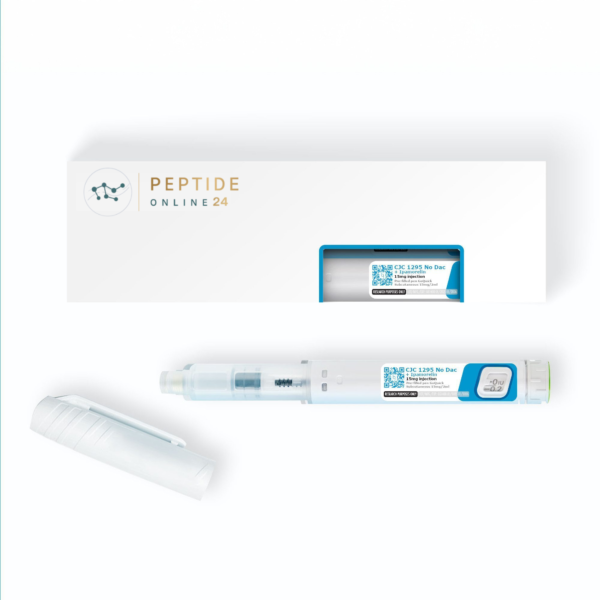
CJC-1295 and Ipamorelin
Two separate molecules with two separate mechanisms, almost always sold as one product.
Read CompoundTesamorelin
A GHRH analogue that already holds a marketing authorisation, which changes the picture.
Read CompoundFollistatin 344
The myostatin side of this area, and what the animal work actually measured.
Read FrameworkResearch use only
Why none of the above is a statement about what happens to a person.
ReadQuestions about this area
Mostly about the difference between release patterns and outcomes.