
Two compounds, one conversation
BPC-157 is a fifteen-residue fragment of a protein found in gastric juice, unusually stable in acid, with a proposed mechanism running through blood-vessel formation and growth-factor signalling. TB-500 is a fragment of thymosin beta-4, a cytoskeleton regulator, with a proposed mechanism running through actin binding and cell migration.
Different origins, different sequences, different proposed routes. What they share is a research context — injury models — and a conversation that treats them as siblings because forums discuss them in the same threads.
Neither has published human trials of meaningful size. That sentence belongs in the first screen of any honest comparison, so here it is.
What is actually different
The two literatures, side by side and without inflation.
| BPC-157 | TB-500 | |
|---|---|---|
| What it is | Fragment of a gastric-juice protein, 15 residues | Fragment of thymosin beta-4, a 43-residue actin regulator |
| Proposed mechanism | Angiogenesis and growth-factor signalling | Actin binding and cell migration |
| Receptor identified | No | Not applicable in the same sense — acts by binding actin |
| Main injury models | Tendon, ligament, muscle, gut | Cardiac, corneal, dermal |
| Oral viability | Unusually acid-stable; capsule format exists | No — injectable format only |
| Human trials | None published | None published |
| WADA status | On the prohibited list | On the prohibited list |
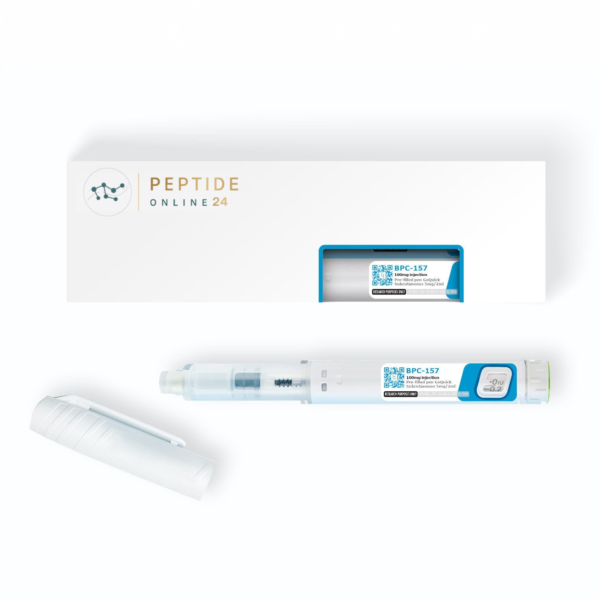
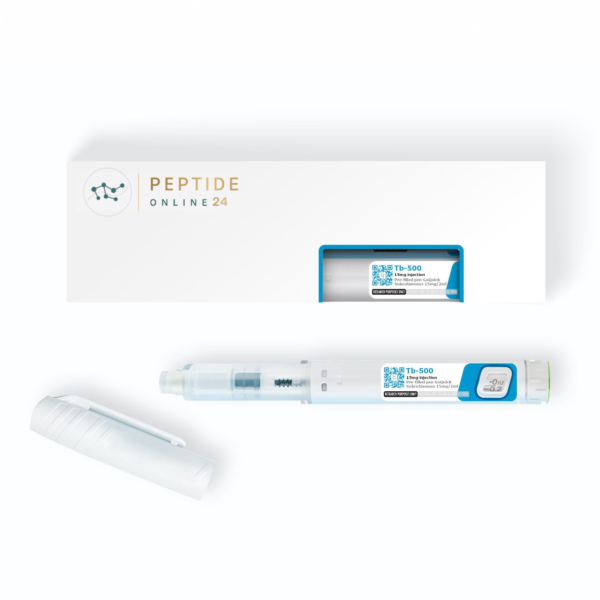
| In this catalogue | Pen, and capsules with KPV | Pen |
Both literatures are animal-model work. Consistency across models is worth something; it is not the same thing as human evidence.
Why they are stacked, and what that rests on
The pairing logic is that the two proposed mechanisms are complementary: one compound works on the supply lines, the other on getting cells to the site. As a hypothesis it is coherent, which is presumably why it spread.
What it is not is tested. We know of no controlled work comparing the combination against either compound alone, so the stack is a plausible idea repeated often enough to sound established.
If a choice has to be made between them, the injury model is the honest guide: the BPC-157 literature leans toward tendon and gut work, the TB-500 literature toward cardiac and corneal. Matching compound to model is a sounder basis than any forum ranking.
Both compounds, documented per batch
HPLC-verified at 99% minimum, certificate tied to the lot number, on request before ordering.
Each compound in full
The individual pages carry the detail this comparison compresses.
About the pair
The questions this comparison is searched for.